

This blog post was originally written by Connor Williams of Ashton Mechanical Group published on February 6th, 2026 and is shared here with permission.
I recently had the amazing opportunity to join other home services business owners on a fundraising trip to South Dakota in support of the incredible Explore The Trades not-for-profit organization, including a pheasant hunt aligned with their mission.

Pheasant Hunt fundraising trip to South Dakota.
While Kate Cinnamo, Executive Director of Explore The Trades, wasn’t able to join us on the trip itself, she played a key role in helping organize it and generously agreed to sit down with a member of our Ashton team after the trip to answer a few questions and share more about the impactful work the Explore The Trades team is doing to support early awareness, education, and career pathways in the skilled trades.
What is Explore The Trades, and how did it come to be?
Explore The Trades was founded in 2005 by a group of small business owners in plumbing, HVAC, and electrical. They could see a labor challenge coming and, at the same time, were watching hands-on learning disappear from schools. The organization was created to give back to the industry and to take responsibility for telling the story of the trades in a more intentional way.
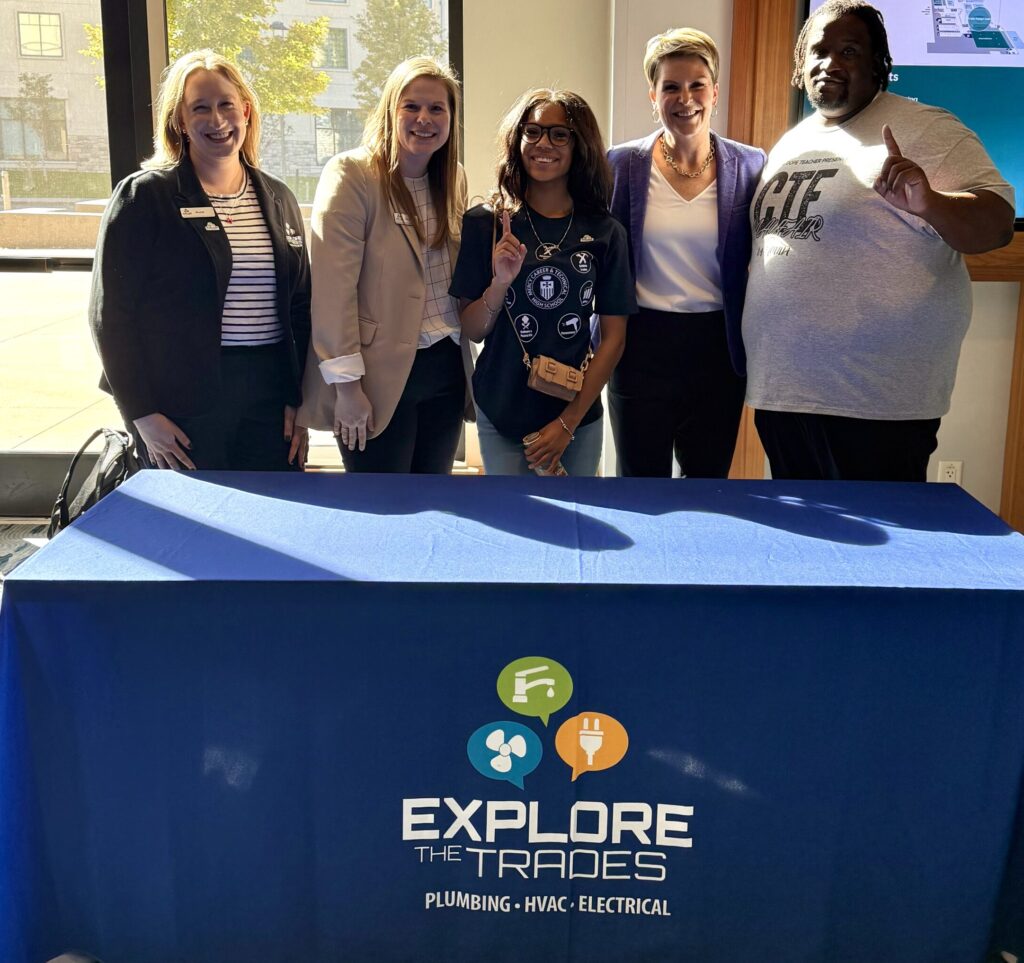
(L to R): Maddy Sorenson (Explore The Trades), Rosa Dunn (Explore The Trades), Jamiah W. (student), Kate Cinnamo (Explore The Trades), Evin Jarrett (CTE Instructor at Mayfair School)
Why do you think the trades became overlooked?
A big part of it is exposure, or the lack of it. Many people simply didn’t grow up around the trades and never saw them presented as an option. When shop classes were removed and education systems shifted toward standardized testing, students stopped being introduced to these careers. It wasn’t a conscious rejection; they just didn’t know what was possible.
Why is early exposure to the trades so important?
Confidence starts young. When kids get to build something or work with their hands, they experience a sense of capability. Research shows many students begin forming ideas about their future before high school. Early exposure doesn’t force a career decision; it opens doors and expands what students believe they can do.
How does Explore The Trades support schools and educators?
A major focus is supporting teachers and school counselors who want to help students explore all options but may not have current information about trade careers. One of the most effective tools has been career pathway posters that outline education routes, earning potential, and job outcomes. These posters are now in nearly a quarter of U.S. school districts.
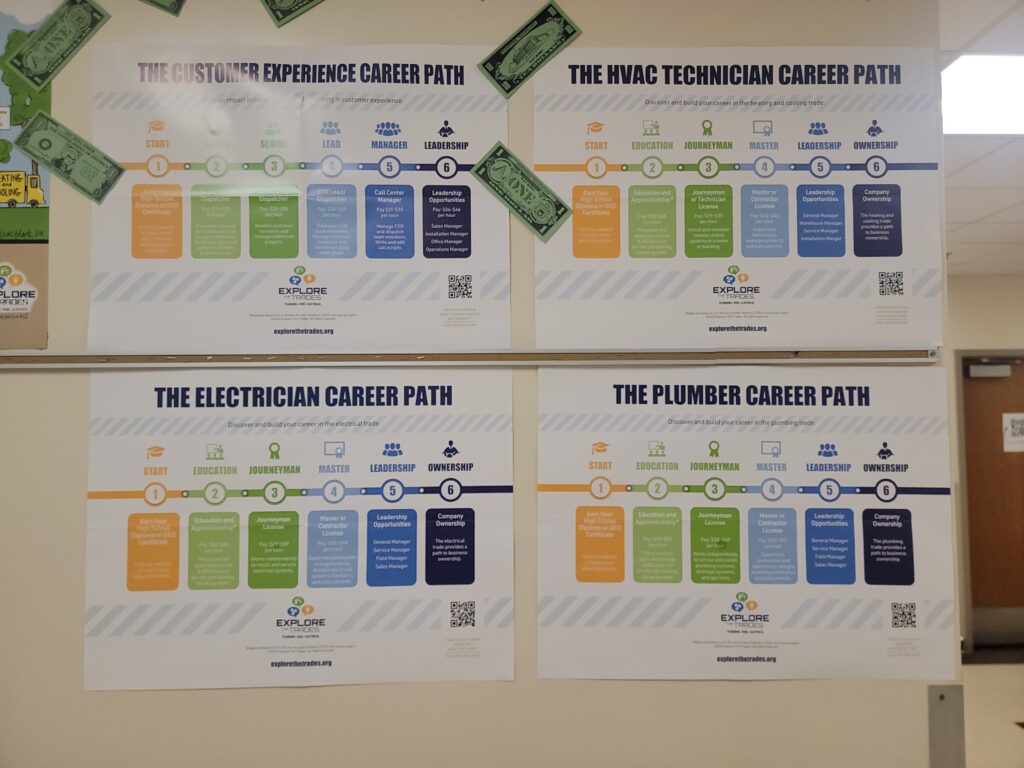
Career pathway posters displayed at Horace O’Bryant school in Key West, FL.
What about engaging younger students?
For elementary schools, illustrated posters show how tradespeople make everyday life work, from turning on the lights to running water. It helps students connect the trades to their daily experiences and understand that these careers are essential and meaningful.
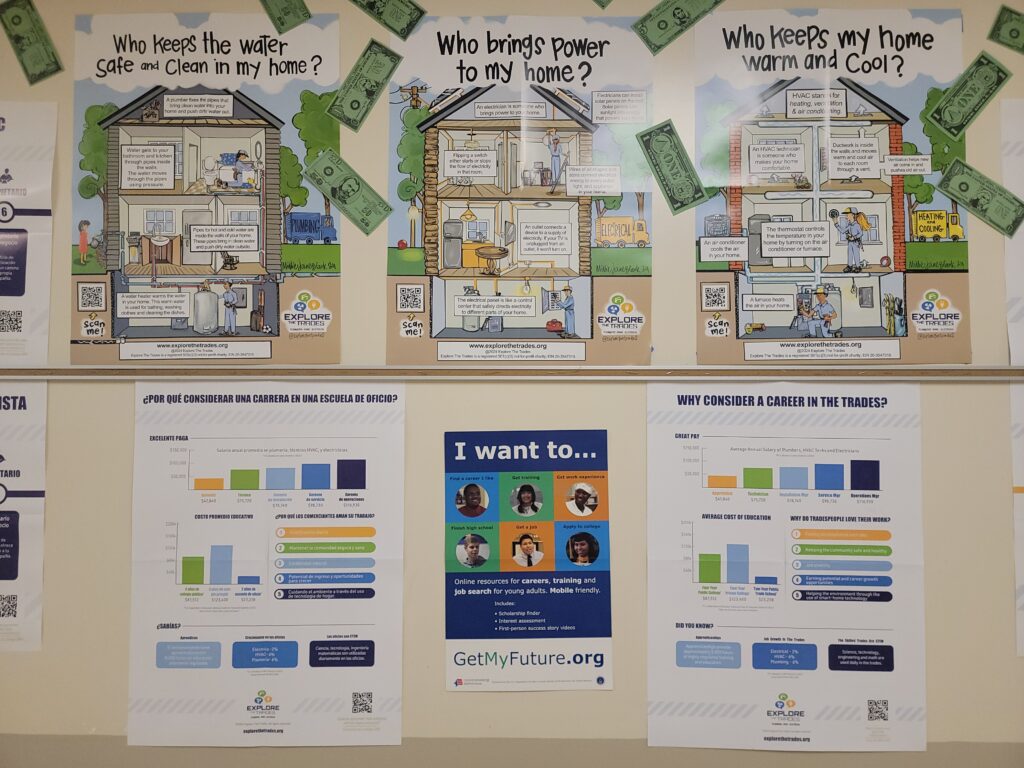
Career pathway posters displayed at Horace O’Bryant school in KeyWest, FL.
What role do local businesses play in this work?
Local businesses are critical. When schools request guest speakers or hands-on experiences, connecting them with contractors from their own communities makes the work feel real and relatable. Those interactions may seem small in the moment, but they often leave a lasting impression.
How do technology and AI fit into the future of the trades?
Technology will support the trades, not replace them. There will always be hands doing the work. What’s changing is how technology enhances efficiency, diagnostics, and sustainability. As systems become smarter, trade careers increasingly intersect with technology, innovation, and environmental responsibility.
There’s been mention of a “lost generation” in the trades. What does that mean?
As shop classes disappeared and college became the default path, many people were never shown viable alternatives. Millennials were often not exposed to the trades at all. What’s shifting now is visibility, driven in part by social media and real-world storytelling that shows what these careers look like.
Is there a story that captures the impact of this work?
One powerful example is an inner-city elementary and middle school where students are gaining hands-on experience in welding, soldering, and masonry through a dedicated skills lab.
With guidance from Evin Jarrett, a CTE teacher at Mayfair School in Philadelphia, PA, a deeply committed educator, students aren’t just learning technical skills, they’re building confidence and beginning to envision new futures.
By 7th and 8th grade, students are already getting a head start, working toward high school–level certifications and building professional portfolios before they even enter high school.
Why does this matter?
Introducing skilled trades education early equips students with practical skills, confidence, and clear career pathways. It’s a powerful way to prepare the next generation for success in a rapidly changing workforce.
You can watch the full panel discussion to learn how educators are shaping the future of the trades here.