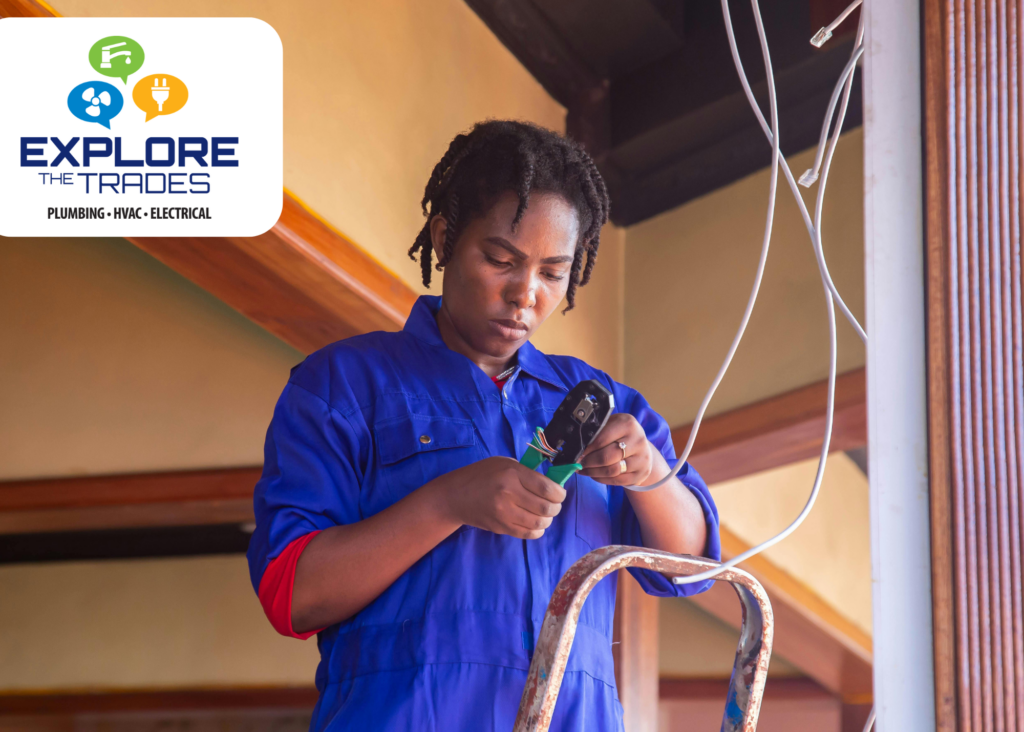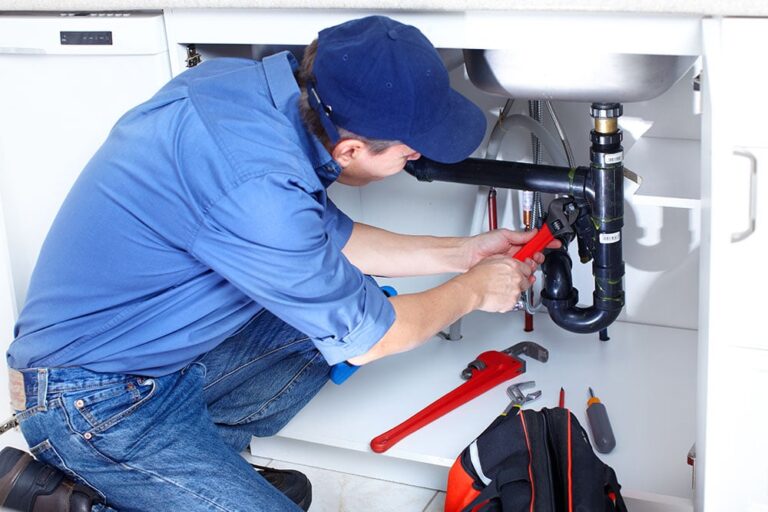
Most people first encounter the trades in their own homes. Here are some of the ways that trades professionals serve residences:
- Plumbing: Installing and maintaining home plumbing systems, upgrading to water-efficient fixtures, and working directly with homeowners to solve everyday problems.
- HVAC: Installing and repairing heating and cooling systems, along with air filtration, ventilation, and humidity control.
- Electrical: Fixing outages and wiring issues, installing lighting and panels, and wiring smart home tech and EV chargers.
Why it matters: Residential trades pros are the ones homeowners call when something goes wrong, and the ones who make homes safer and more energy-efficient along the way.

Step outside the home, and the scale changes fast. Commercial trade jobs support the buildings where entire communities spend their days, like schools, hospitals, and businesses, large and small.
- Plumbing: Maintaining systems built for high daily use, working on fire sprinkler systems, and installing water- and energy-conserving fixtures.
- HVAC: Installing and maintaining large-scale systems, meeting strict energy and safety standards, and optimizing performance across big buildings.
- Electrical: Planning and installing wiring and power systems, maintaining infrastructure that serves large numbers of people, and installing energy-efficient lighting and controls.
Why it matters: Commercial trades pros keep schools, hospitals, and businesses running safely.
Factories, power plants, water treatment facilities, and data centers all run on systems most people never think about until they fail. This is also where the trades intersect with public utilities: It’s the infrastructure that keeps electricity, water, and connectivity flowing to entire communities.
- Plumbing: Managing large-scale piping systems, supporting industrial cooling, and working within municipal water and wastewater treatment systems that serve entire towns and cities.
- HVAC: Maintaining high-capacity cooling and ventilation for industrial sites and data centers, including climate-controlled environments at power plants and treatment facilities where equipment can’t afford to overheat.
- Electrical: Working with high-voltage systems and automation on the industrial side, and, for those who specialize further, supporting the power generation, transmission, and distribution infrastructure that keeps the grid running.
Why it matters: This is the trades work behind the systems a community can’t function without: power grids, clean water, and the data infrastructure running underneath daily life. When these systems go down, everything downstream feels it.
Agriculture is one of the most essential corners of the trades, with a growing need for skilled workers.
- Plumbing: Installing irrigation systems and managing water supply and drainage across a farm.
- HVAC: Designing ventilation for barns and greenhouses and controlling temperature, airflow, and humidity for crops and livestock.
- Electrical: Wiring irrigation and grain-drying systems, setting up backup generators, and automating feeding, milking, and climate control.
Why it matters: Trades pros in agriculture help keep farms productive and resilient. This work connects directly to how food reaches communities.