

Technical skill gets you in the door, but it’s not what keeps you employed. Ask any contractor, service company owner, or hiring manager in plumbing, HVAC, or electrical work what separates their best team members from their worst, and technical ability rarely tops the list.
What comes up instead: showing up on time, staying focused, working well with a crew and customers, and taking the job seriously. These are workplace readiness skills, sometimes called soft skills, and they matter as much as anything taught in an apprenticeship or trade school program.
If you’re weighing career options and a trade is on the list, here’s what employers actually care about once you’ve proven you have the right training and skills.
Workplace readiness skills are the non-technical habits and behaviors that determine whether someone succeeds on the job, apart from their ability to do the work itself. In the skilled trades, these skills look like:
Of course, none of this replaces technical training. If you can’t fix a leak, it doesn’t matter how good your soft skills are. But trade professionals who pair solid technical skills with strong workplace readiness earn repeat customers and promotions — and they’re usually the last person to be let go when work slows down.
Being respectful of time is one of the most important expectations in trade jobs. Whether the work is on construction sites or in a home, you must be able to show up at set times.
Attendance matters just as much as time management. Everyone needs time off occasionally for illness or family matters, and it’s completely acceptable as long as you notify your employer as early as possible. But frequent, unpredictable absences signal instability that most employers won’t tolerate for long.
Overtime and on-call work are also part of the deal in many trades. Work in the trades tends to run in cycles: heavy demand for a stretch, followed by slower periods. Tradespeople who understand this (and who set aside extra income during high-earning weeks instead of treating it as a new baseline) tend to handle the industry’s ups and downs better than those who don’t. On-call rotations, which are common in HVAC and plumbing service work, require a similar mindset: flexibility paired with the discipline to actually be available when a call comes in and a work ethic to do the job right.
The bottom line: Employers can train someone in a task, but they can’t train someone to consistently show up and follow through. That’s on the individual, and it’s often the first thing that gets noticed — for better or for worse.
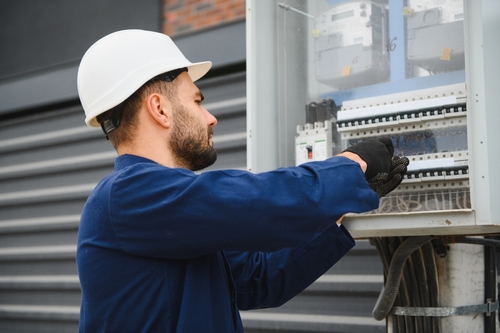
Trade work rewards concentration, not just manual skill. There’s an old saying: “measure twice, cut once.” It’s a reminder that the best tradespeople think before they act, not just move fast.
This habit matters even more when you consider the environment: job sites involve power tools, electrical current, heights, and hazardous materials. A moment of distraction isn’t just costly, it’s also dangerous, both to the worker and everyone nearby.
This is also where craftsmanship comes in. Some people pick up the hands-on side of a trade quickly enough to get by on autopilot. The result can be work that’s technically acceptable, but rarely anything to be proud of. The tradespeople who reach the top of their field stay engaged with the task at hand, double-check their work, and care about the result, not just about finishing the job.
Building a habit of focus and safety awareness early, whether in a training program or an entry-level role, pays off over the course of an entire career.
Nearly every trade job is, in some form, a people job. In service work, you could be dealing with a homeowner in their most stressful situation: a sewer backup, failure in the middle of winter, or an AC unit that dies during a heat wave. How a technician handles the interaction matters as much as the repair itself.
Service trade professionals need to make customers feel comfortable enough to invite them into their homes and businesses, then clearly explain what’s wrong and what it’ll take to fix it. It’s easy to assume this means being a natural talker, but that’s not the case. Data shows that sales reps who listen more than they speak close more sales. The same is true for service work: Listening to a customer describe a problem, asking clarifying questions, and reading the situation before launching into an explanation builds more trust than performing a confident monologue.
This extends to coworkers and team members, too. Even construction trades, which are often stereotyped as less people-focused than service work, require getting along with supervisors, inspectors, and crew members. Tradespeople who consistently clash with those around them tend to be the first to be let go, regardless of how good their technical skills are.
Reading the room also matters here. It’s fine to use trade jargon with a fellow tradesperson, but a customer who doesn’t know the difference between a valve and a fitting needs a plainer explanation.
Every trade evolves. Each year, new products, tools, techniques, and code updates emerge, and the tradespeople who stop learning after their apprenticeships end fall behind fast. After all, would you trust a doctor who hasn’t kept up with medicine since school, or a lawyer who ignores recent rulings?
Sometimes, ongoing education falls on your employer’s shoulders, but not always. Trade publications, industry trade shows, and conversations with suppliers are all ways tradespeople can keep their own knowledge current instead of waiting for someone else to provide it. Personal presentation is part of professionalism, too. Trade work can get messy, but showing up to a job looking unkempt sends the wrong message before any work even starts.
The good news is that none of this requires waiting for a first job to start developing. Trade school programs, pre-apprenticeship courses, and classroom-based trades education build workplace readiness directly into their curriculum alongside technical skills. Employers have made clear it’s what they’re hiring for, so gaining these soft skills is more important than ever.
If you’re exploring a trade career, you can become job-ready by building these habits now:

Pursuing a career in the skilled trades is a direct, practical path to a rewarding career — and it doesn’t require the debt of a four-year degree — but employers are hiring for the whole person, not just the certification.
Explore the Trades has the resources future trades workers need to feel informed and prepared as they grow into their careers. Whether you’re a student exploring a trades career or an educator looking to introduce the skilled trades into your classroom, we aim to support the next generation of tradespeople.
In addition to technical ability, employers want reliability, time management, communication skills, safety awareness, and professionalism. If it comes down to two candidates with a similar technical background, they’ll often choose the one with a stronger understanding and command of these soft skills.
Technical skills are the hands-on abilities specific to a trade, including wiring, soldering, and system installation. Workplace readiness skills are habits and behaviors that determine whether someone can hold and succeed in that job in the long run.
Start by building reliability and communication habits before entering the workforce. Choose a training program or trade school that incorporates workplace readiness alongside technical instruction, and treat your early jobs or apprenticeships as an opportunity to practice both.
Absolutely. Technical skills determine whether a person can do the work, while soft skills help them keep the job, get promoted, and be recommended for future opportunities.