
EXPLORING HVAC CAREER PATHS
Choosing a career in the heating, ventilation, air conditioning, and refrigeration (HVAC) trade means working a job that positively impacts your community. Plus, the job opportunities available in the trades, specifically in the HVAC trade, are vast. Did you know that HVAC technicians work in places like wind farms, research labs, and even on cars? Wherever you need heat and air conditioning, you’ll find an HVAC professional!
Not sure if HVAC is the right fit? Wondering if another trade might suit you better? Take our quiz to find the career path that’s right for you.
WHY SHOULD I PURSUE THE HVAC/R FIELD?
The outlook for a career in HVAC is extremely positive. Here are six reasons to become an HVAC technician:
1. ON THE JOB TRAINING
Unlike other career paths that require years of schooling and come with large student loans, in the field of HVAC you will be trained on the job and get paid at the same time. HVAC technicians may start their careers in an apprenticeship, learning with a combination of on-the-job training and classroom instruction. However, HVAC isn’t as stringent about apprenticeships as other trades.
2. GREAT INCOME
A career in HVAC has great earning potential. The latest numbers from the Bureau of Labor Statistics in 2024 show that the average salary of an HVAC technician is $59,810 per year.
3. COMMUNITY INVOLVEMENT
The overall health of the community depends on the skilled trades because these professions maintain a clean water supply, safeguard indoor air quality, and keep the lights on.
4. THERE ARE ALWAYS JOBS AVAILABLE
The demand for skilled tradespeople continues to grow. According to the Bureau of Labor Statistics, employment in heating, air conditioning, and refrigeration is projected to grow 8% from 2024 to 2034.
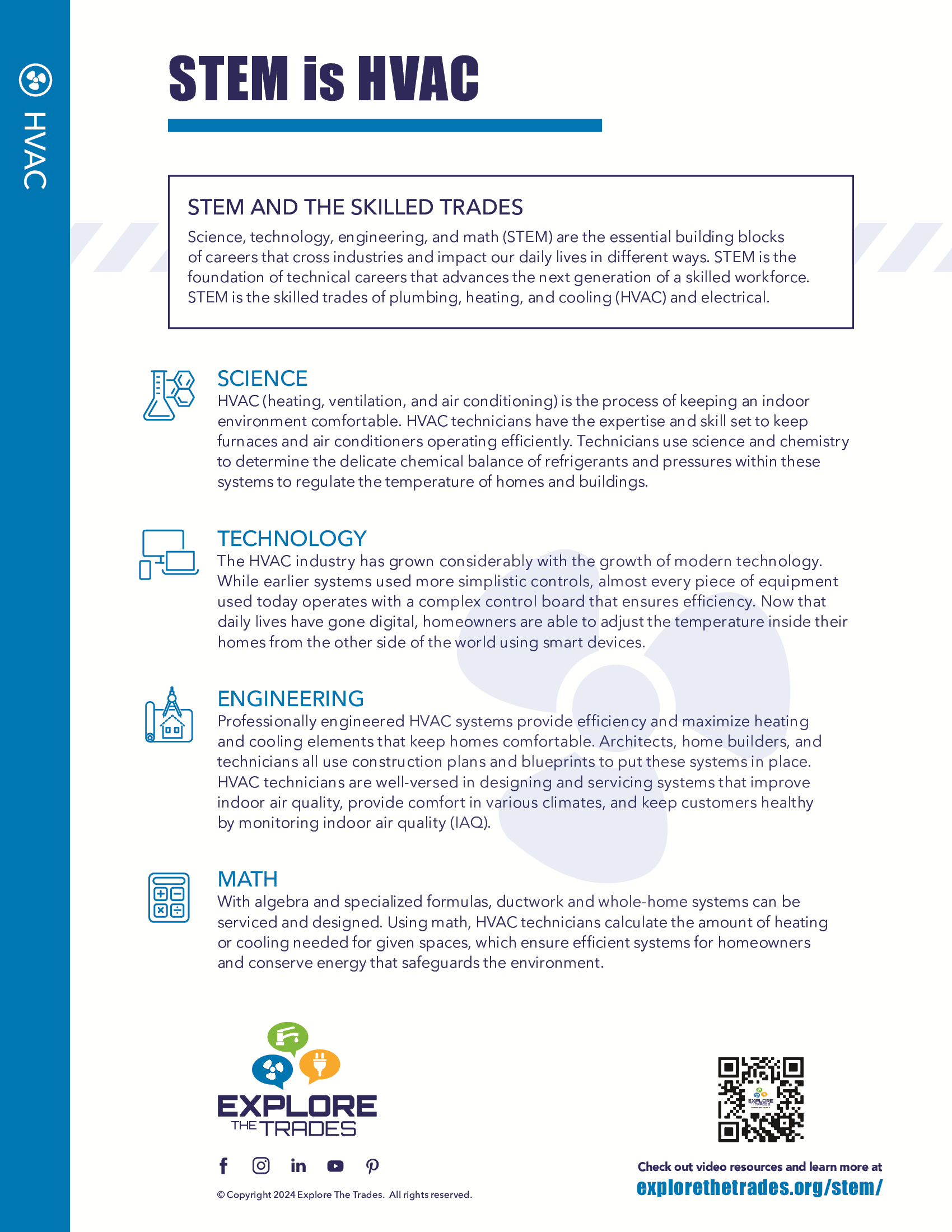
5. HVAC IS STEM
Science, technology, engineering, and math (STEM) are the essential building blocks of careers that cross industries and impact our daily lives in different ways. STEM is the foundation of technical careers that propel our future workforce forward to stability, career growth and success.
6. HVAC SUPPORTS SUSTAINABILITY
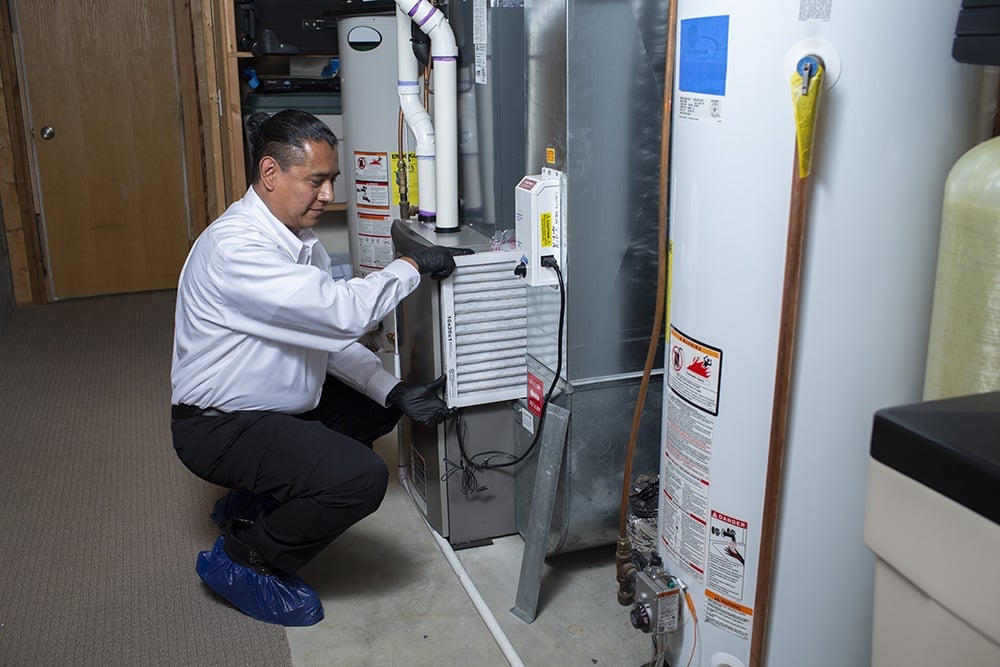
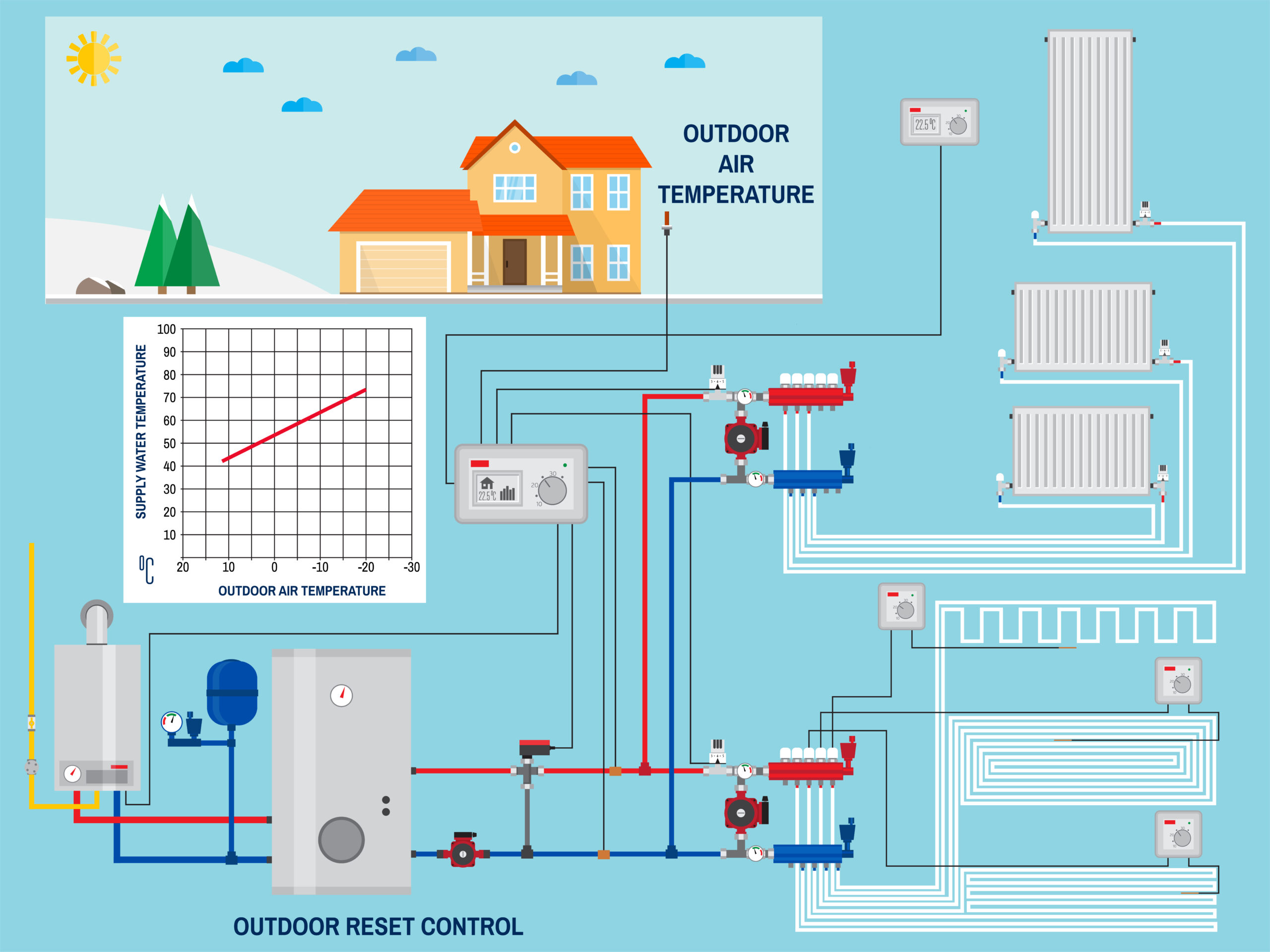
Modern HVAC technology is transforming how homes use energy. Smart thermostats, high-efficiency heat pumps, improved ventilation systems, and other innovations help reduce energy waste, lower utility costs, and improve indoor air quality. As an HVAC professional, you’ll help homeowners stay comfortable while adopting cleaner, more sustainable solutions.
Examples of sustainable HVAC technology include:
- Geothermal Heat Pumps: Use solar energy stored in the ground for highly efficient heating and cooling.
- Mini-Split Heat Pumps: Heat or cool individual rooms, reducing overall energy use.
- Solar Air Conditioning: Powered by solar panels instead of traditional electricity.
- Quiet Duct Wrap: Made from recycled materials that support both energy efficiency and healthier air.
HVAC isn’t the only trade making strides toward a more sustainable future. See sustainability at work in the electrical and plumbing trades!
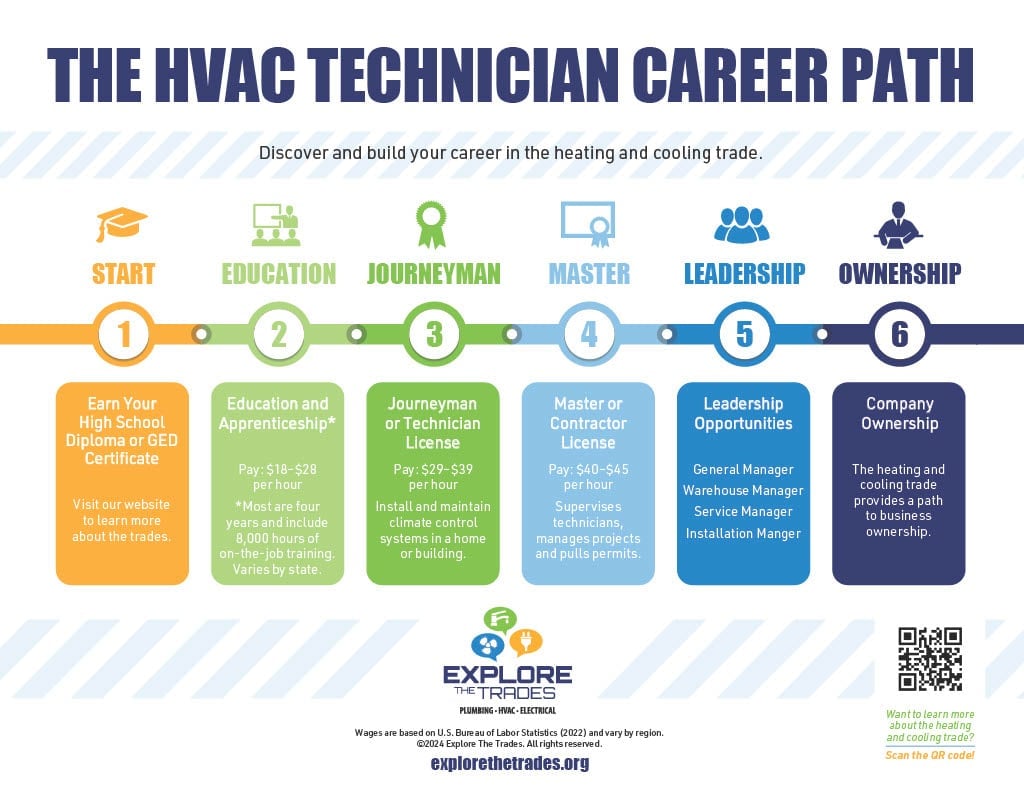
THE HVAC SERVICE TECHNICIAN CAREER PATH
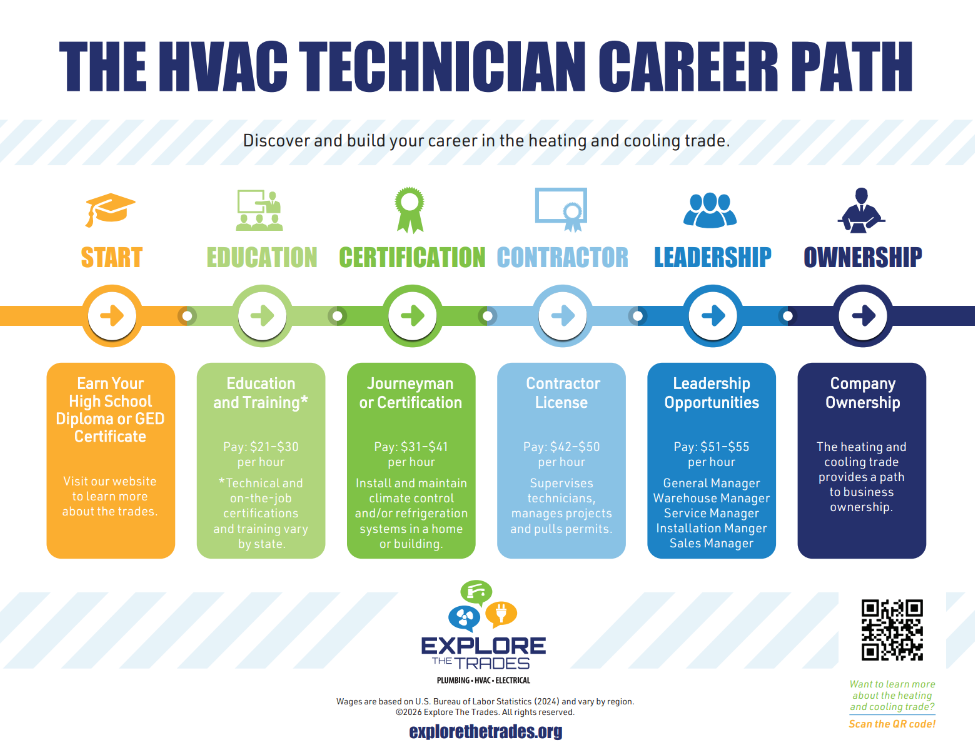
An HVAC career grows with you. Each stage brings new skills, higher pay, and greater opportunities for leadership or business ownership.
The outlook for a career in HVAC/R is extremely positive. Here are six reasons to become an HVAC/R technician:
1. ON THE JOB TRAINING
Unlike other career paths that require years of schooling and come with large student loans, in the field of HVAC/R you will be trained on the job and get paid at the same time. HVAC/R technicians may start their careers in an apprenticeship, learning with a combination of on-the-job training and classroom instruction. However, HVAC/R isn’t as stringent about apprenticeships as other trades.
2. GREAT INCOME
A career in HVAC/R has great earning potential. The latest numbers from the Bureau of Labor Statistics in 2024 show that the average salary of an HVAC/R technician is $59,810 per year.
3. COMMUNITY INVOLVEMENT
The overall health of the community depends on the skilled trades because these professions maintain a clean water supply, safeguard indoor air quality, and keep the lights on.
4. THERE ARE ALWAYS JOBS AVAILABLE
The demand for skilled tradespeople continues to grow. According to the Bureau of Labor Statistics, employment in heating, air conditioning, and refrigeration is projected to grow 8% from 2024 to 2034.
5. HVAC/R IS STEM
Science, technology, engineering, and math (STEM) are the essential building blocks of careers that cross industries and impact our daily lives in different ways. STEM is the foundation of technical careers that propel our future workforce forward to stability, career growth and success.
What is an Apprenticeship?
Understanding The Role of an HVAC Technician
An HVAC technician’s job is to repair and maintain the climate control system in a building. This means they must know how to fix heating, air conditioning, and ventilation systems. Learn more about what it means to be an HVAC technician!
What is an Apprenticeship?
Understanding The Role of an HVAC Technician
FROM SCHOOL TO THE SKILLED TRADES: BECOMING AN HVAC TECHNICIAN
Have you ever wondered which high school classes prepare you for a career in the trades?
Check out the series of downloads that illustrate the connections between high school and the skilled trades.
Frequently Asked Questions
Is HVAC a Trade Worth Pursuing?
Yes! HVAC combines technical knowledge with hands-on experience in designing, installing, maintaining, and repairing HVAC systems. HVAC professionals play a crucial role in ensuring indoor comfort in homes, offices, and industrial settings.
What Do HVAC Technicians Do?
HVAC technicians install, maintain, and repair heating, ventilation, and air conditioning systems. They work with systems that control temperature and air quality in residential and commercial buildings. Their tasks may include repairing furnace and air conditioning systems, installing ventilation ducts, and ensuring systems operate efficiently and safely.
How Long Does an HVAC Training Program Last?
HVAC trade school typically takes six months to two years to complete, depending on the program and whether it includes training. Many trade schools offer both certificate programs and associate degrees, allowing students to gain the skills and knowledge needed for the HVAC/R profession in a relatively short amount of time, along with on-the-job training with a company.
Is a Career in HVAC Right For Me?
HVAC might be right for you if you enjoy working with technology, problem-solving, and hands-on tasks. If you’re interested in a career that offers variety, job stability, and growth opportunities, HVAC/R can be an excellent choice. It’s also ideal for individuals who enjoy working in different environments, from residential homes to commercial and industrial facilities. If you’re still not sure, take our quiz!
How Do I Start an HVAC Career?
You can enroll in a trade school or community college program, often completing your training in under two years. From there, many new technicians enter an apprenticeship where they continue to build skills and earn income on the job, though it’s not required. Explore The Trades offers free resources and career guidance to help you take the first step toward a stable, in-demand profession. If you have more questions on how to start your HVAC career, check out the resources on our blog or reach out to Explore The Trades! We’d love to help.
From School to the Skilled Trades : HVAC
Have you ever wondered which high school classes prepare you for a career in the trades?
Check out the series of downloads that illustrate the connections between high school and the skilled trades.